
The energy shock is already widely understood. What is not yet widely understood is what comes after it — and why a diplomatic deal, when it comes, will not be the end of the story.
By Chris Gaffney, Managing Director of the Georgia Tech Supply Chain and Logistics Institute and a former Vice President of Global Strategic Supply Chain at The Coca-Cola Company.
Three weeks ago, I started hearing from contacts in my network. Senior supply chain executives, people who have managed through COVID and the Suez Canal blockage, were expressing concern. The kind of concern that doesn’t make it into earnings calls or press releases. The kind that shows up in private conversations between people who actually move goods around the world for a living.
Their worry wasn't about crude oil prices. Crude oil prices are now widely discussed. Their worry was about what happens after crude oil prices. About the plastic in your water bottle, the fertilizer going into this year's corn crop, the engine oil in your car, the polyester in your running shoes.
Those conversations sent me back to the data. The geopolitical crisis and the energy shock are now well-documented in mainstream reporting. What is less discussed and what my conversations with experienced practitioners suggested was being systematically underestimated is the operational cascade downstream of that energy shock. I wanted to answer a specific question: given that the Strait has been effectively closed since February 28, what aspects of the downstream impact are already locked in regardless of a diplomatic solution, and what is still unfolding? Could I use publicly available data, straightforward analytical tools, and accessible modeling to produce a defensible, quantified view of that question?
The answer, after several weeks of work, is yes. And what the analysis shows is more operationally significant than most of the public commentary has yet captured.
Start with what is already true.
The International Energy Agency (IEA) has characterized this as what it describes as one of the largest supply disruption in the history of the global oil market. Flows through the Strait fell from roughly 20 million barrels per day before the conflict to low single-digit levels in March and early April. Asian crude stocks dropped 31 million barrels in March alone, with further declines expected through April. Global refinery runs in Asia were cut by around 6 million barrels per day. Middle distillate prices in Singapore hit all-time highs.
But energy prices, as alarming as they are, are the visible part of this problem. The less visible part is what those commodities become.
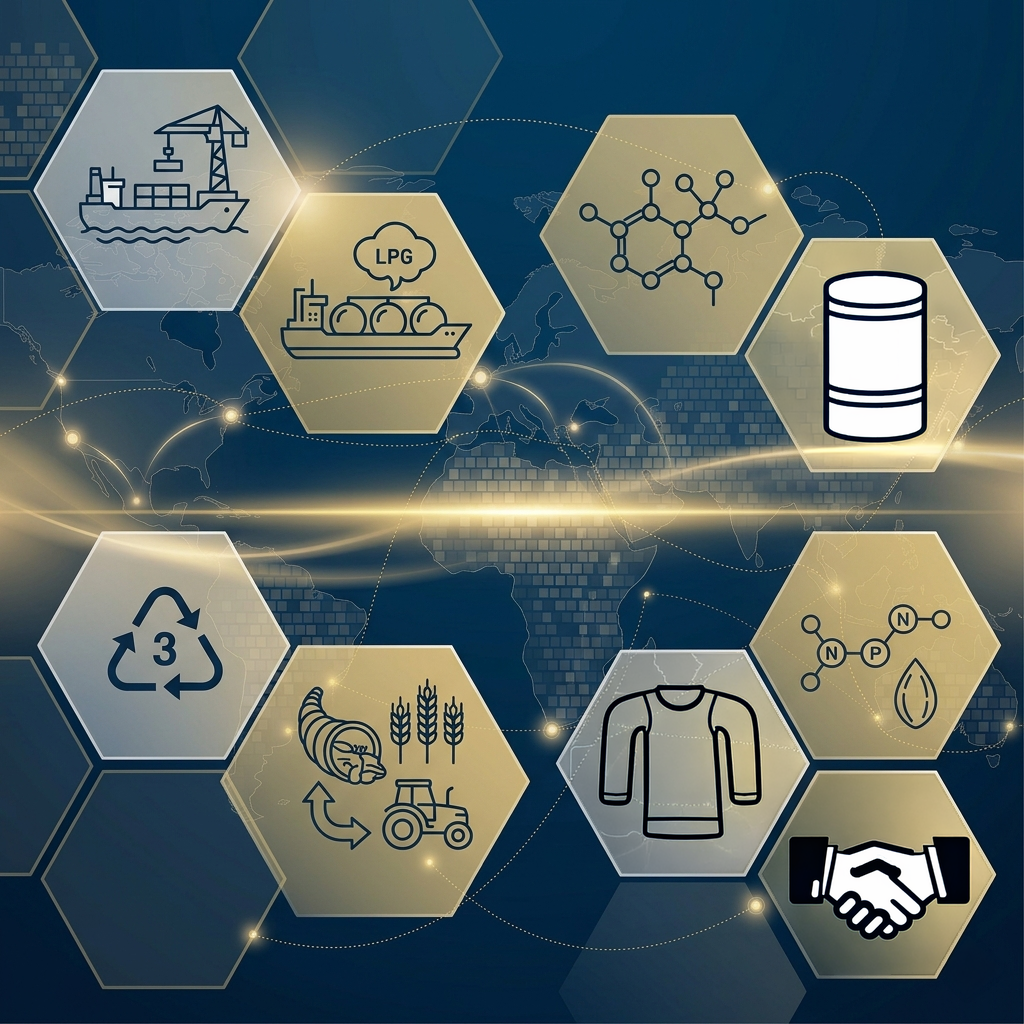
Naphtha, a petroleum derivative most people have never heard of, is the feedstock for the polyester in your clothing, the polyethylene terephthalate (PET) in your water bottle, the polypropylene in your food packaging, the polyvinyl chloride (PVC) in your plumbing. Roughly 80 percent of the naphtha imported into Asia comes from the Middle East. South Korean petrochemical plants were running at 60 to 70 percent of capacity by late April. Japanese crackers at 65 to 75 percent. The IEA confirmed it in plain language: Asian petrochemical plants curtailed operating rates as feedstock supply dried up.
Liquefied petroleum gas (LPG) is the cooking gas that 60 percent of Indian households depend on for daily meals and was the first fuel to be rationed. Queues formed as deliveries were delayed. This reflected physical supply constraints alongside severe price pressure.
Fertilizer prices hit 49 percent above last year's levels by April, according to DTN data. Corn planting intentions dropped 3.5 percent. The math on that is straightforward: the food prices that result from this spring’s planting decisions will show up at the grocery store in 2027. The disruption has a long tail, and most of that tail is still ahead of us.
The question isn’t whether this will affect what you pay for everyday goods. It already is. The question is how far the cascade goes and how long it lasts.
Here is what the modeling shows.
Working from publicly available IEA, U.S. Energy Information Administration (EIA), and commodity price data, I built a scenario model that tracks 12 commodity-region pairs through a 300-day simulation horizon. I then ran that model over 1,500 times with slightly varying assumptions to produce a range of outcomes rather than a single point estimate. That range is more honest than a single number, because the genuine uncertainty in this situation deserves to be represented.
Three findings stand out.
First: a diplomatic deal today would be unlikely to quickly reverse what has already happened. This is the finding that surprised me most, and it held across almost every simulation. The high-import-dependency commodities have already depleted enough inventory that functional shortage is already embedded in the near-term outlook regardless of when the Strait reopens. The diplomatic question determines how long the pain lasts and how severe the recovery will be. For consumers, this means the effects may show up long after the headlines fade through higher prices, product shortages, and delays in everything from clothing and packaging to fertilizer-dependent food production.
Second: Europe's most visible supply chain story, airlines canceling flights, is a price story, not a physical shortage story. The IEA documents approximately six weeks of European jet fuel supply. Airlines are grounding aircraft because fuel has doubled in price, not because airports are running dry. Meanwhile, Asian petrochemical plants are curtailing because feedstock physically stopped arriving. These two situations look similar in the headlines. They require completely different responses. For consumers, the difference matters because one problem mainly makes travel and goods more expensive, while the other can interrupt the actual production of the products modern life depends on.
Third: the recovery will be harder and longer than most public commentary assumes. S&P Global estimates five weeks to seven months for full supply normalization after a reopening, depending on infrastructure damage. Mine clearance alone requires 60 to 90 days of sustained operations before commercial vessels can transit safely. Insurance premiums will not normalize until underwriters see months of safe transit. And when supply does restart, suppressed demand returns simultaneously with a supply base that is still rebuilding. The EIA's 2027 demand forecast of 1.6 million barrels per day growth (nearly three times the depressed 2026 rate) makes this concrete. We have seen this pattern before. COVID demonstrated it at scale. The bullwhip effect, applied to a supply-side energy shock, produces a second dislocation on the back side of the crisis.
What this means for your grocery bill, your gas tank, and your business.
The analysis maps 36 supply chain pathways from raw commodity to consumer shelf across 15 product categories. Here are three examples that are or will be visible to you.
Take construction materials. PVC pipe, insulation, and window profiles all begin with petrochemical feedstocks moving through the Gulf region. PVC resin prices in India rose nearly 80 percent in March. Since PVC pipe is largely PVC resin, the pass-through to construction costs is immediate and difficult to absorb. The result is likely to show up in higher prices for building materials, repairs, and infrastructure projects long before most consumers connect the cause.
The same pattern is unfolding in synthetic motor oil. Shell's Pearl Gas-to-Liquid facility in Qatar — one of the world's most important sources of premium Group III base oil — was taken offline by missile strikes. Producers in Bahrain and the UAE have declared force majeure. Roughly 40 percent of global Group III supply is now offline or unable to ship. For consumers, that eventually means higher oil-change costs, more expensive industrial lubricants, and added operating costs moving quietly through trucking, aviation, manufacturing, and delivery networks.
Food arrives later, but it arrives. Fertilizer prices are already sharply elevated, and planting decisions are being made right now under those conditions. The agricultural calendar creates a lag most consumers do not see. Disruptions this spring can become higher grocery prices many months from now. That is not speculation. It is simply how agricultural supply chains work.
We tend to underestimate the breadth and duration of these events while they are happening, and overestimate how quickly things return to normal after they appear to resolve.
What we did, and why it matters how we did it.
Every number in this analysis traces to a cited source. Where data was insufficient and judgment was required, those judgment calls are labeled as such. The model is not a black box. It is a documented, reproducible simulation that any researcher can run independently.
I also used AI — specifically Claude by Anthropic — as a partner to help analyze and build this work. While I provided the analytical framework, the practitioner judgments, and the validation of assumptions, the AI assisted with drafting, building models, computation, and data synthesis. This collaboration is fully detailed in the paper.
This represents a new way of performing analytical work. The results are significant: a quantified, sourced, and reproducible analysis of a complex disruption in the actual world. What usually takes a traditional research team months was completed in weeks. That speed is vital when a situation is still unfolding.
The larger point.
Sixty-seven days in, the global supply chain community is navigating a disruption that has no precise historical parallel. The 1973 OAPEC embargo lasted months and produced lasting structural change in how the world consumes energy. The 1990 Gulf War shock was brief enough that it produced relatively mild downstream consequences. The 2022 European energy crisis showed us what happens when industrial feedstock costs become uneconomic for months at a time: capacity comes offline, and some of it does not come back for a long time.
The 2026 Hormuz closure is now 72 days old. It has already lasted longer than the 1990 Gulf War shock. It is approaching the territory where the worse historical outcomes become the more relevant comparators. Every additional week of closure moves the probability distribution toward the scenarios that produced lasting structural damage.
Both public and private entities may be underestimating the magnitude of what recovery will require. Restoring normal supply chain function after an event of this scale and duration is not a matter of reopening a waterway. It is a matter of rebuilding inventory buffers, restarting industrial capacity, normalizing insurance markets, reestablishing commercial relationships, and managing the demand surge that hits simultaneously with the supply restart. The organizations that are planning for that recovery now will be materially better positioned than those that wait.
The people I talked to three weeks ago were right to be concerned. Their concern was based on experience and instinct and what they were seeing in their own business. Our work over the past weeks validates their perspective.
An enduring diplomatic solution is the essential precondition for any of this to improve. Without it, the cascade continues. With it, the hard work of recovery begins. Either way, the time to understand the full scope of what is in motion is now and not after the headlines move on.
Editor’s note:
View the related report: technical analysis, scenario modeling, Monte Carlo simulation methodology, consumer impact assessment.
The Hormuz Supply Shock: What Happens Next to Your Supply Chain

Chris Gaffney